When Should Two Dogs From the Same Family Share a Boarding Run?
Owners often assume their two dogs should board together. Sometimes that is the right call. Here is how to decide, what to ask at booking, and how to set up, price, and record a shared run.
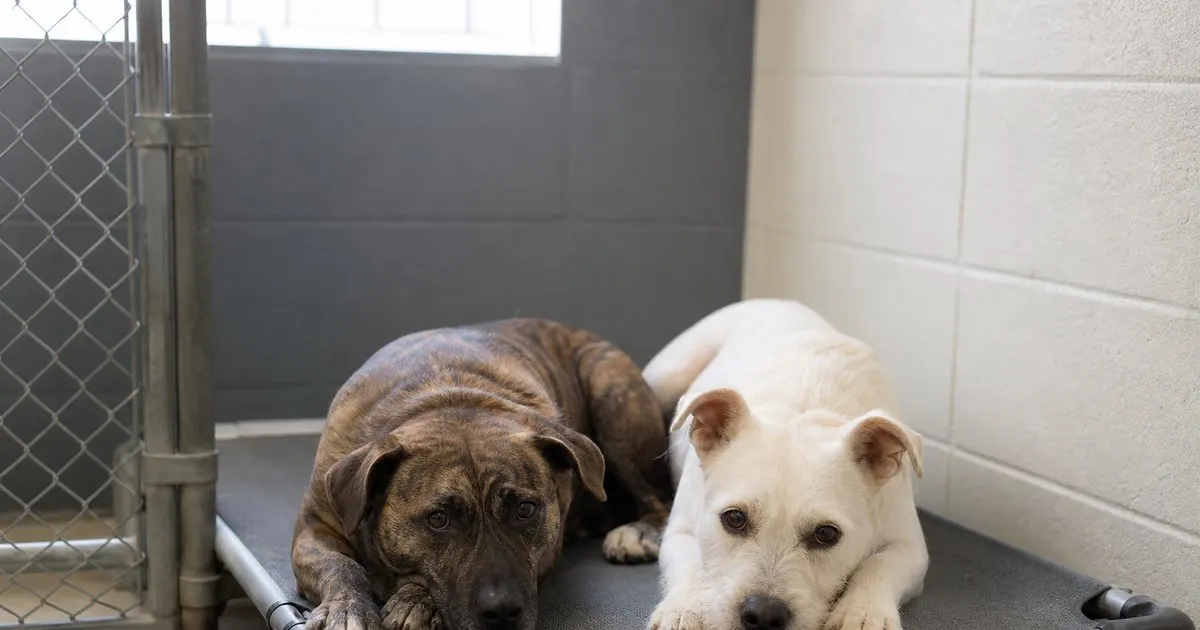
What sharing gets right and where it goes wrong
The case for sharing is real. A dog with its housemate beside it usually settles faster, vocalizes less, and eats more normally on the first night than a dog alone in a strange run. Owners feel better too, and the kennel gains a run it can sell to another family during a sold out week. For pairs that sleep in the same bed at home and have never had a cross word, a shared run is often the kindest arrangement in the building. Related: What Makes Pet Owners Trust a Boarding Kennel With Their Dog?
The case against sharing is also real, and it shows up in the situations a kennel cannot supervise. Two dogs that coexist in a house with rooms to retreat to are now in a space with no exit. Food, a bowl, a cot, or a chew can trigger guarding that never appeared at home. One dog can quietly bully the other for days. An injury can happen overnight with nobody watching, followed by a vet call the owner did not expect. Medication gets complicated as well, because you need to know which dog actually ate the pill pocket.
Keep reading: How Do Boarding Kennels Avoid Double Booking During Busy Holiday Weeks?, What Vaccination Proof Should a Boarding Facility Require Before a Pet's Stay?, Why Do Deposits Reduce No Shows for Pet Boarding Reservations?. See how PetStayr helps you pet boarding reservations and kennel availability.
Questions that predict a good share
Ask the owner specific questions at booking rather than accepting a general assurance that they get along. Do they eat in the same room at home without incident? Do they sleep in the same bed or crate? Has either dog ever been in a scuffle with the other, even a brief one? Is either on medication or a special diet? How big is the size and age gap? Are both spayed or neutered? Then ask for a story: describe a time they were confined together, such as a long car ride or a vet waiting room, and what happened.
Treat any scuffle history, food guarding, a large size disparity, an intact male with an intact female, or a dog recovering from surgery as a red flag that means separate runs. Treat separate feeding at home or a wide age gap as yellow flags that call for extra observation. Whatever you decide, reserve the right to separate the dogs at any time, get that in writing on the reservation, and decide now whether a mid stay separation is charged as a second run. Owners accept that rule when they hear it before the stay, not after. Related: What Vaccination Proof Should a Boarding Facility Require Before a Pet's Stay?
Setting up the run and the routine
Feed separately, always, even for the friendliest pair. Either feed in adjoining runs with the divider closed or take one dog out of the run for meals, and remove bowls when they are done. Give the pair two cots or beds, leave no high value chews in the run, and put the pair in one of your larger runs rather than squeezing them into a standard one. Staff should note the first hour, the first meal, and the first night specifically, because that is when trouble shows up if it is going to.
The paperwork matters at shift change. The reservation should list both dogs on one run, with a visible note that they share, feed separately, and may be separated if needed, plus a separate line for each dog's food and medication. If your software books by run, confirm that two pets can be attached to one run without the system counting two runs as occupied; otherwise your availability will be wrong for the whole stay. On a paper board, write both names in the same box and circle it so nobody sells the neighboring run assuming it is theirs. Related: How Should Kennels Handle Feeding and Medication Notes for Boarded Pets?
Pricing and availability for shared runs
Two pricing patterns are common: full rate for the first dog and a reduced rate for the second dog in the same run, or a flat family run rate. The discount should reflect the real saving, which is one run and one clean out, without ignoring the added care, which is two sets of notes, separate feeding, and closer observation. During busy weeks the discount doubles as a capacity tool, because two dogs in one run frees a run for another family that would otherwise be turned away. Related: How Do Boarding Kennels Avoid Double Booking During Busy Holiday Weeks?
Availability is where shared runs get tricky. They need your large runs, so track large run inventory separately and never promise a shared run over the phone until you know one is free for the whole stay. Think about the split scenario as well: if you have to separate the dogs on night three of a sold out week, a second run may simply not exist. That is why the booking questions matter more over holidays. Some kennels only accept shared run requests on sold out weeks for pairs they have boarded together before, which is a reasonable rule to publish.
- Share a run only for dogs that already eat, sleep, and travel together without incident.
- Feed separately at every meal, even for the friendliest pair.
- Put the right to separate in writing and decide the fee before it ever happens.
- Book shared runs against your large run inventory so the promise matches the space.

Julien Jimenez
Julien Jimenez is an independent software builder based in Paris. He designs, ships, and operates focused SaaS products for small businesses and independent professionals. Read the full author page.
Fill every kennel without double booking
Pet boarding reservations and kennel availability. PetStayr is built to help you put this into practice.
Manage reservationsMore from the PetStayr blog

How Do Boarding Kennels Avoid Double Booking During Busy Holiday Weeks?
What Vaccination Proof Should a Boarding Facility Require Before a Pet's Stay?
Why Do Deposits Reduce No Shows for Pet Boarding Reservations?
Get the PetStayr playbook
Practical guides on pet boarding reservations, straight to your inbox as we publish them. No spam, unsubscribe any time.